
Global Solutions-focused Summit on Expanding Access to Kidney Transplantation held at Stanford
Physicians, scholars, healthcare practitioners, and policymakers gathered to explore research advances underway in India, Brazil, and the U.S.

Earlier this month, the Alliance for Paired Kidney Donation (APKD), Stanford economist Alvin E. Roth, and Stanford Impact Labs hosted the Palo Alto Summit, a two-day global convening at Stanford University dedicated to exploring challenges and advances in kidney transplantation around the world.
On the heels of the 2025 World Transplant Congress in San Francisco, more than 30 physicians, scholars, transplant coordinators, and government officials from the U.S., India, Brazil, Italy, the United Arab Emirates, Qatar, and South Africa gathered to share key learnings, challenges, and advances in the field.
According to the World Health Organization (WHO), approximately 9 percent of the global population lives with chronic kidney disease (CKD). In the most acute cases, CKD leads to kidney failure, the best treatment for which is transplantation (replacing a failing kidney with a suitable, healthy kidney from either a living or deceased donor).
Though the number of transplants performed each year has steadily grown, demand for kidneys significantly outpaces supply and many people die waiting for a transplant. In May 2025, the World Health Organization (WHO) formally adopted a kidney health resolution at the 78th World Health Assembly in Geneva, which acknowledged that kidney disease is “one of the fastest-growing causes of death globally and is projected to become the fifth leading cause of death by 2050.”
It is against this backdrop that APKD and Roth, the Craig and Susan McCaw Professor of Economics at Stanford’s School of Humanities and Sciences, have teamed up with transplant specialists in India, Brazil, and the United States to form the Extending Kidney Exchange project.
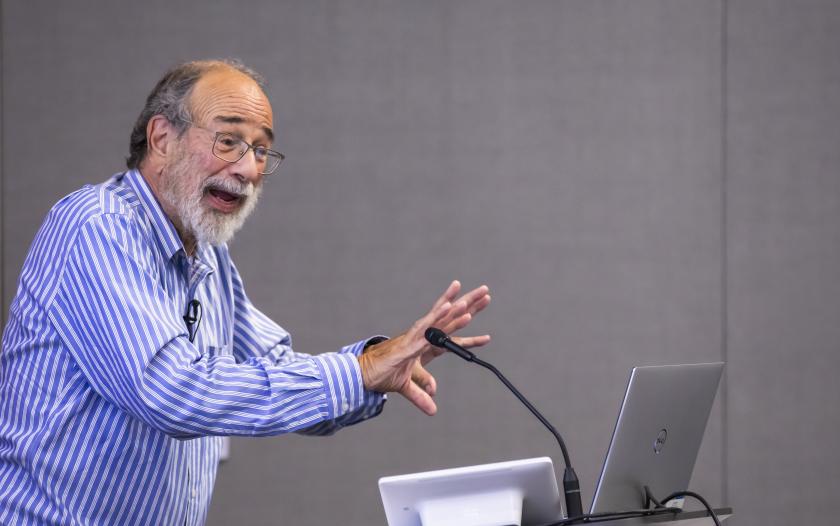
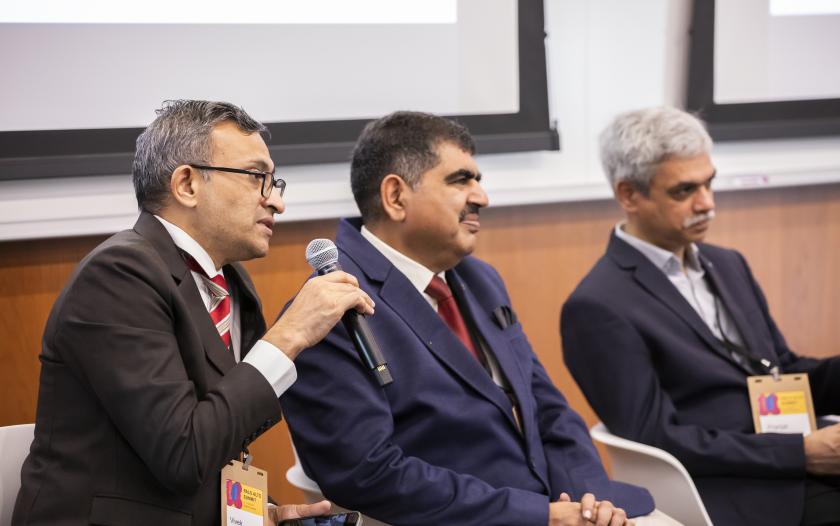
With Stage 3 funding from Stanford Impact Labs, the global team is conducting research and building the capacity of transplant center programs aimed at expanding lifesaving transplants from both living and deceased kidney donations.
“There is a profound need for kidneys nearly everywhere you look,” notes Roth. “This severe gap between demand and supply only accentuates the need for expanding global access to proven innovations that can save lives.”
Accelerating the availability of a transplant process known as kidney paired donation (KPD) is of particular interest to this group. Supercharged by Roth’s Nobel Prize-winning matching theory, KPD allows willing but incompatible living donor and recipient pairs to swap kidneys with other incompatible pairs. In so doing, each recipient receives a compatible transplant, and each donor overcomes their incompatibility, thus unlocking between 20-30% of additional transplants. The lifesaving potential of KPD is significant, yet much work remains to be done to realize its full potential at a global scale.
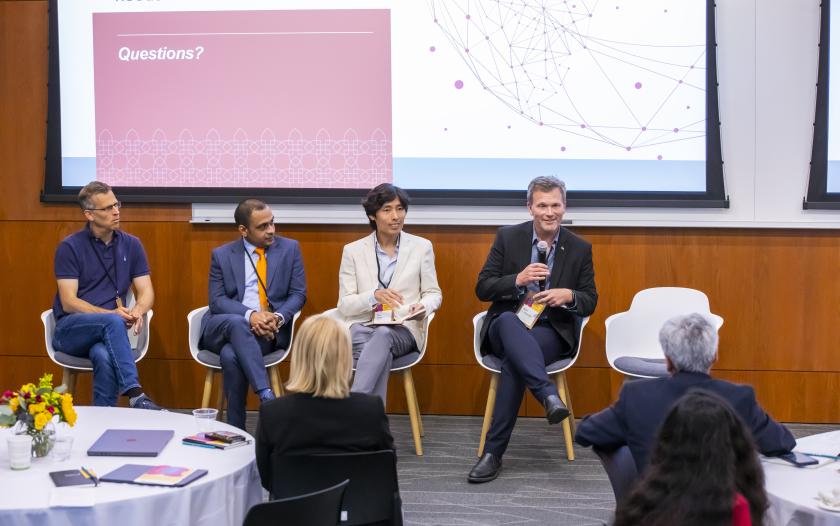
John Friedewald, transplant nephrologist and professor of medicine at Northwestern University’s Feinberg School of Medicine has been working in kidney paired donation for almost 20 years and has seen it grow from very simple two-way exchanges within a single hospital to now long chain transplants between multiple hospitals. He calls that progress, now visible in the U.S. and beyond, “incredibly rewarding”.
“Many people in this field have done a great deal of work to grow and improve KPD and convenings like this summit offer a unique opportunity to be able to share best practices among transplant professionals. I’m invigorated and inspired by the fact that organizations like APKD exist to serve as a global platform to grow these lifesaving techniques and extend the opportunity for a transplant to more people worldwide.”
The summit’s sessions were designed to advance national efforts in KPD in India and Brazil, and deceased donor-initiated chains (DDIC); foster collaboration among leading clinical, policy, and academic partners; and identify actionable steps and shared milestones for KPD in India and Brazil, paired liver exchange in India, and DDIC in the United States. As a transplant strategy, DDIC utilizes kidneys from deceased donors to create a chain of transplants so as to maximize the use of available organs and to connect multiple recipients, especially when there are mismatches or compatibility issues.

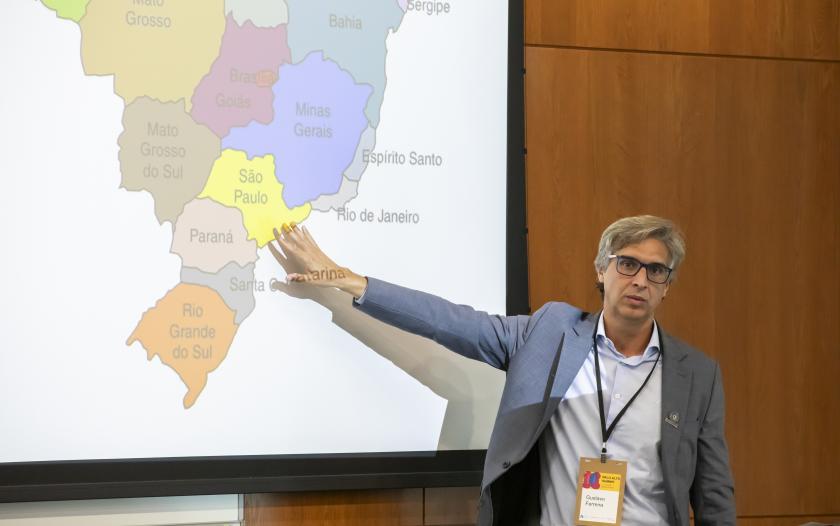
“When the very first chain of kidney transplants took place in 2006, it was not necessarily welcomed as an innovation,” recalls Michael Rees, a transplant surgeon at the University of Toledo and founder of the Alliance for Paired Kidney Donation (APKD). “It is incredibly exciting to reflect on the progress we’ve been able to make across the transplant community since that time, to increase the utility of a single kidney from either a living or deceased donor.”
Rees underscored how considerable Roth’s contribution to this progress has been. “One of Al’s greatest gifts is his ability to take very complicated ideas and distill them into something workable in the real world. We’ve seen his brilliant scholarship work quite well in high-income countries and our research now underway as part of the SIL-funded Extending Kidney Exchange project grants our team the opportunity to extend kidney exchange to low- and middle-income countries.”
*Photos by Christine Baker